Best Calcium Supplements for Optimal Health Choices?
Calcium plays a vital role in maintaining optimal health. It supports bone development, muscle function, and cardiovascular health. Many individuals often overlook their calcium intake, leading to potential deficiencies. These deficiencies may result in various health issues, including weakened bones and increased risk of fractures.
Choosing the right calcium supplement can be challenging. The options available vary widely in forms, dosages, and bioavailability. Some people may prefer calcium carbonate, while others might choose calcium citrate for better absorption. It’s essential to understand your needs and consult a healthcare professional when considering supplementation.
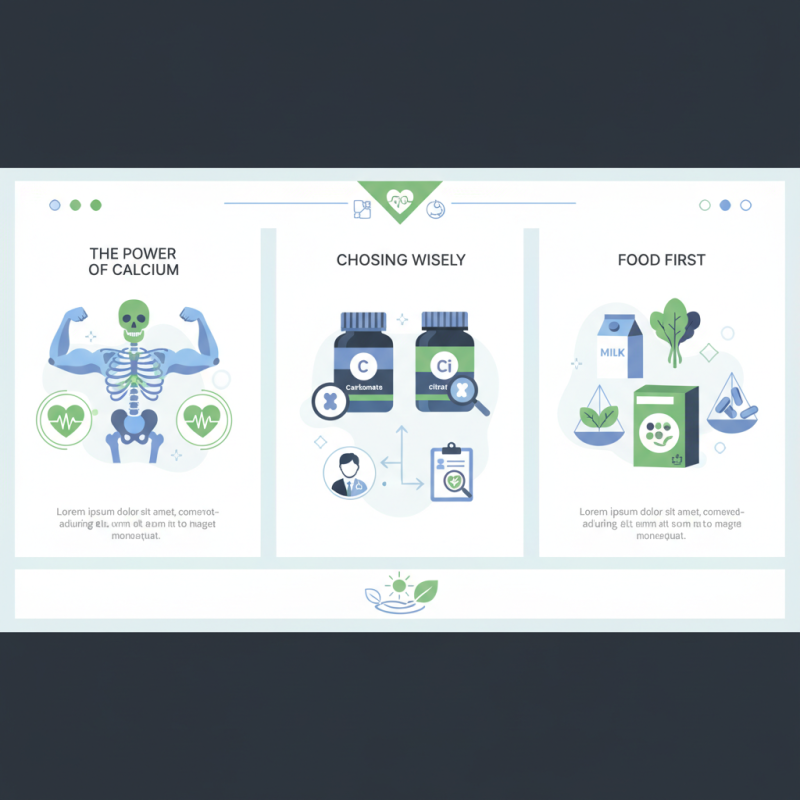
Additionally, it’s crucial to note that while supplements can help, they are not a substitute for a balanced diet. Real food sources of calcium, such as dairy products, leafy greens, and fortified foods, should be prioritized. Reflecting on your dietary choices may uncover areas for improvement. Balancing supplements with whole foods can lead to better health outcomes.
Understanding the Importance of Calcium in Overall Health
Calcium plays a vital role in maintaining overall health. It is essential for strong bones and teeth. This mineral is also crucial for muscle function and nerve signaling. Many people do not get adequate calcium through their diet. This deficiency can lead to serious health issues.
Bone density tends to decline with age. Women, especially post-menopause, are at higher risk for osteoporosis. Regular intake of calcium is important for prevention. It’s interesting to note that not everyone absorbs calcium equally. Some may need higher doses or additional nutrients for better absorption.
Moreover, calcium’s role extends beyond just bone health. It helps in blood clotting and may even influence heart health. However, excessive calcium intake can have negative effects. It is essential to balance calcium with other nutrients like vitamin D and magnesium. Understanding individual needs is crucial for optimal health.
Calcium Intake vs Health Outcomes
This chart illustrates the correlation between varying levels of calcium intake and health outcomes. As seen, individuals with low calcium intake (<500 mg) reported higher adverse health outcomes compared to those with adequate calcium intake (1000 mg).
Types of Calcium Supplements: Natural vs. Synthetic Options
When considering calcium supplements, it’s essential to understand the two main types: natural and synthetic options. Natural calcium sources often come from algae or limestone. They may contain other beneficial nutrients, such as magnesium and trace minerals. This can enhance absorption. On the other hand, synthetic calcium supplements primarily include calcium carbonate and calcium citrate. These are highly concentrated and can be convenient for those on-the-go.
The effectiveness of these supplements often varies among individuals. While some find natural sources easier to digest, others may prefer the precise dosages offered by synthetic forms. It’s worth noting that not all supplements are created equal. Some may contain fillers or additives that could complicate absorption. Regular blood tests can help determine if you are meeting your calcium needs.
Personal preferences also play a role. Some people may experience digestive discomfort with certain types. It’s crucial to listen to your body and adjust your choices accordingly. Consulting with a healthcare professional can provide tailored advice. They can help you navigate the complexities of supplementation based on your specific health goals and dietary needs.
Best Calcium Supplements for Optimal Health Choices
| Type of Calcium |
Source |
Absorption Rate |
Recommended Daily Allowance (RDA) |
Potential Side Effects |
| Calcium Carbonate |
Natural | Limestone, Shells |
Good (30-40%) |
1000-1300 mg |
Constipation, Gas |
| Calcium Citrate |
Natural | Citrus Fruits |
Better (20-30%) |
1000-1300 mg |
Stomach Upset |
| Calcium Gluconate |
Synthetic | Calcium Salt |
Moderate (10-20%) |
1000-1300 mg |
Nausea, Vomiting |
| Calcium Lactate |
Natural | Fermented Foods |
Moderate (20-30%) |
1000-1300 mg |
Diarrhea, Rare Allergic Reactions |
Key Factors to Consider When Choosing Calcium Supplements
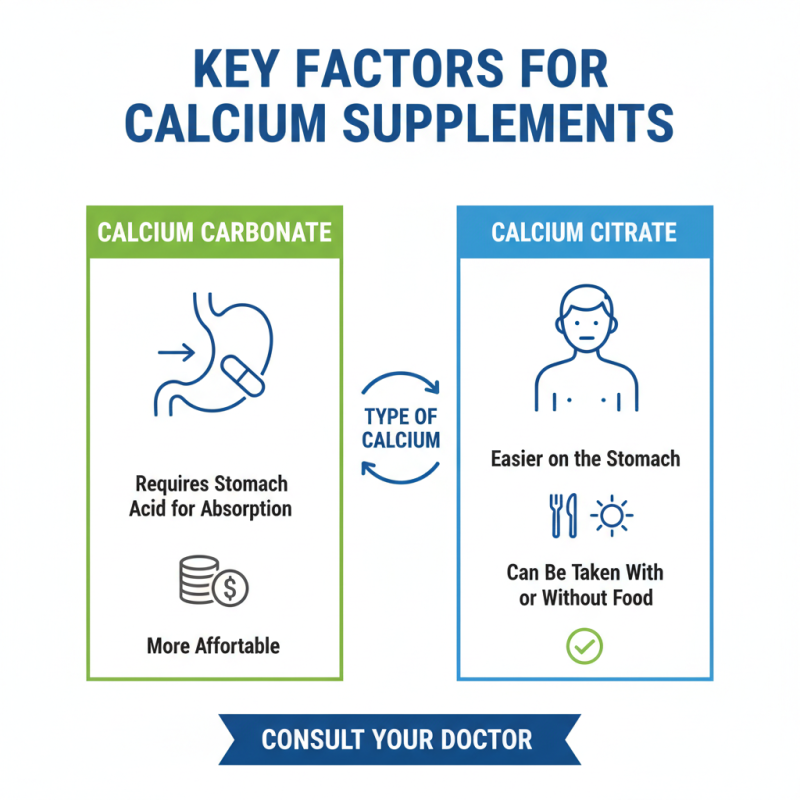
When selecting calcium supplements, it's vital to consider several key factors. Start with the type of calcium. Calcium carbonate and calcium citrate are the most common forms. Calcium carbonate is generally more affordable, but it needs stomach acid for absorption. On the other hand, calcium citrate is easier on the stomach and can be taken with or without food.
Next, pay attention to the dosage. Many people do not realize that the body can only absorb a limited amount of calcium at one time. Typically, it's best to split doses throughout the day. Look for supplements that offer lower doses, especially if you are worried about gastrointestinal side effects.
Don’t forget to consider additional nutrients. Vitamin D is crucial for calcium absorption. A supplement with both calcium and vitamin D is often a better choice. Some products may even contain magnesium, which supports bone health as well. As you choose, reflect on your dietary intake. Are you already getting enough calcium from your food? Being mindful about the sources of your nutrients is essential. Balancing supplements with whole foods can enhance overall health.
Recommended Dosages and Timing for Optimal Calcium Intake
Calcium is vital for maintaining strong bones and overall health. To achieve the best results, understanding recommended dosages and timing is crucial. Generally, adults need about 1,000 mg of calcium daily, increasing to 1,200 mg for women over 50 and men over 70.
When consuming calcium supplements, timing matters. Taking calcium with food can enhance absorption. It's best to split doses for higher efficiency—perhaps a dose in the morning and another in the evening. This method helps maintain consistent levels in your body.
Tips for optimal intake: ensure your supplements include vitamin D, which aids calcium absorption. Consider your dietary sources; dairy, leafy greens, and fortified products can significantly contribute to your daily intake. Reflect on your individual needs. Not everyone requires supplements, and excess calcium could lead to health issues.
Monitor how your body reacts to supplements. Adjust your daily intake if you experience discomfort. Life changes can affect your requirements, such as pregnancy or increased activity levels. Stay informed and consult with a healthcare professional as needed.
Potential Side Effects and Interactions of Calcium Supplements
Calcium supplements are popular for supporting bone health. However, potential side effects can arise. Some users report gastrointestinal issues, such as bloating and constipation. A study published in the Journal of Bone and Mineral Research highlighted that about 30% of individuals experience these symptoms when increasing calcium intake.
Interactions with other medications can also pose risks. Calcium can interfere with the absorption of certain antibiotics and blood pressure medications. Research from the National Institutes of Health indicates that calcium can reduce the efficacy of some treatments. It’s essential for individuals to consult healthcare professionals before adding supplements to their regimen.
Overconsumption of calcium can lead to serious health concerns. Excessive intake may increase the risk of kidney stones and cardiovascular problems. Data from the American Heart Association suggests that high levels might lead to arterial calcification. Monitoring intake and seeking professional advice can help mitigate potential risks. Understanding these factors is crucial for informed health decisions.